Iran internet shutdown: MTN says it has no control over Irancell’s decisions
MTN Group says it has no operational control over MTN-Irancell despite its 49% stake, while rights experts argue the group still has a responsibility to use whatever leverage it retains and improve transparency around government-ordered internet shutdowns.
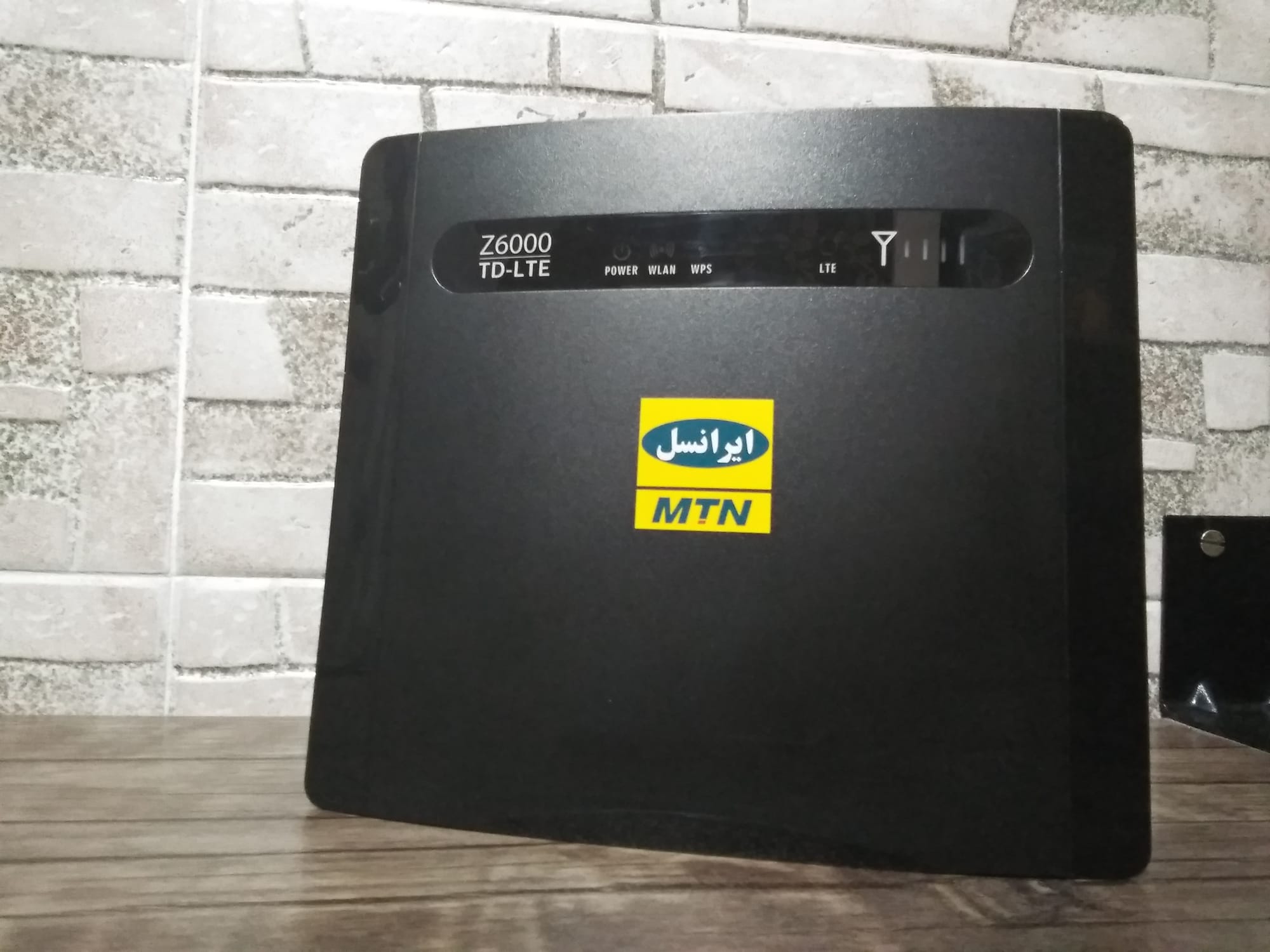
South African telco MTN has confirmed it has "no influence" on MTN-Irancell’s operational decisions despite holding 49% of shares in the Iranian company. This means the telco’s head office could not prevent the government-imposed total internet shutdown the country faced earlier this year.
MTN-Irancell is one of Iran’s leading internet service providers (ISPs) and second-largest mobile operator.
In September 2025, GuruFocus, a news outlet covering private-sector financing and economic investment, reported that MTN CEO Ralph Mupita said the group’s assets in MTN-Irancell had been frozen as a result of US sanctions. The report also noted that MTN had been seeking to exit the Iranian market for years and that Mupita no longer has any decision-making authority over the telecoms business in Iran.
Sherilyn Naidoo, senior manager for digital and human rights at MTN, was invited to speak at a webinar hosted by the Investor Alliance, Ranking Digital Rights (RDR), and the International Corporate Accountability Roundtable (ICAR) on September 10.
Responding to Circuit Breakr, she confirmed GuruFocus' reporting, noting that, because MTN Group only has an indirect minority shareholding in MTN-Irancell, "we do not have the ability to influence any management or operational decisions."
Human Rights Responsibility Extends Beyond Operational Control
Jie Zhang, research manager at ICAR and external research advisor at RDR, acknowledged MTN Group only has "a small control over MTN-Irancell" and highlighted reports "suggesting that the CEO was ousted" by the Iranian government because the company first delayed the shutdown order during the Iranian protests.
"This demonstrates some real limits of MTN’s operational influence in the country," Zhang said. "However, I don’t think a minority stake means a company has no human rights responsibility."
She emphasised the "important distinction" between control and leverage. "A company may not have the ability to simply refuse a government request to shutdown the internet or order day-to-day actions of a local subsidiary, particularly in highly restrictive political environments like Iran. But our question remains: what leverage power does the company still hold? How can that leverage power be used?"
This is why, she said, RDR and ICAR urge private companies for transparency, even when they have to comply with orders that violate human rights.
"When a company cannot directly refuse a government request, they still can have a shareholder and broader-level influence like raising concerns through corporate governance channels and conducting due diligence and, most importantly, being transparent to the public about the demands it receives, the steps it takes to respond and the limitations it faces," Zhang explained.
Besides the isolated Iran case, Naidoo certified that, in any other market where MTN was in command of an ISP, the group systematically vets all requests by governments or regulators to ensure they’re legally valid.
"This is where our risk assessments will come into play: if it is legally valid, we then explore how we can comply while respecting human rights," she added.
MTN’s Human Rights Policy and Risk Assessments
More generally, Naidoo explained that MTN has "a deliberate approach to respecting human rights, simply because it’s the right thing to do and it aligns with our company values."
"This approach includes a digital human rights policy grounded in and informed by the UN Guiding Principles on Business and Human Rights (UNGPs) as well as other international best practices. It stipulates periodic risk assessments and annual impact assessments that we conduct across our markets," she said.
Additionally, Naidoo said MTN conducts additional risk and impact assessments in periods of elections to ensure there is internet service during these periods. "We recognise that we offer a service that enables people to enjoy their human rights online," she added.
Naidoo then stressed that having a policy was only the starting point, saying that "a policy is just a policy without implementation."
She explained that MTN had developed a deliberate playbook to put its human rights policy into practice across the business, including by embedding human rights considerations into its products and services.
She noted that the rapid pace of technological change, particularly the growing use of artificial intelligence, had made this approach increasingly important. MTN, she said, had adopted a responsible AI policy that also encompassed its digital human rights policy, with the aim of ensuring that human rights were respected both in the use of AI and in the way AI systems were developed and deployed across the business and with external stakeholders.
As MTN’s approach to human rights had matured, Naidoo said, the company was seeking to move beyond simply responding to concerns as they arose and instead take a more proactive approach.
She cited children’s rights and online safety as an example. MTN has a long-standing child online protection campaign that it rolls out across its markets, she said, as well as a longstanding relationship with the Internet Watch Foundation. The company also hosts an Africa-wide portal for blocking child sexual abuse material (CSAM) reported on the continent.
MTN Rises in 2026 RDR Index Despite Iran Transparency Gap
The recent efforts by MTN to improve transparency seemed to have paid off as the South African telco climbed to the second place of the 2026 RDR Index for telco giants.
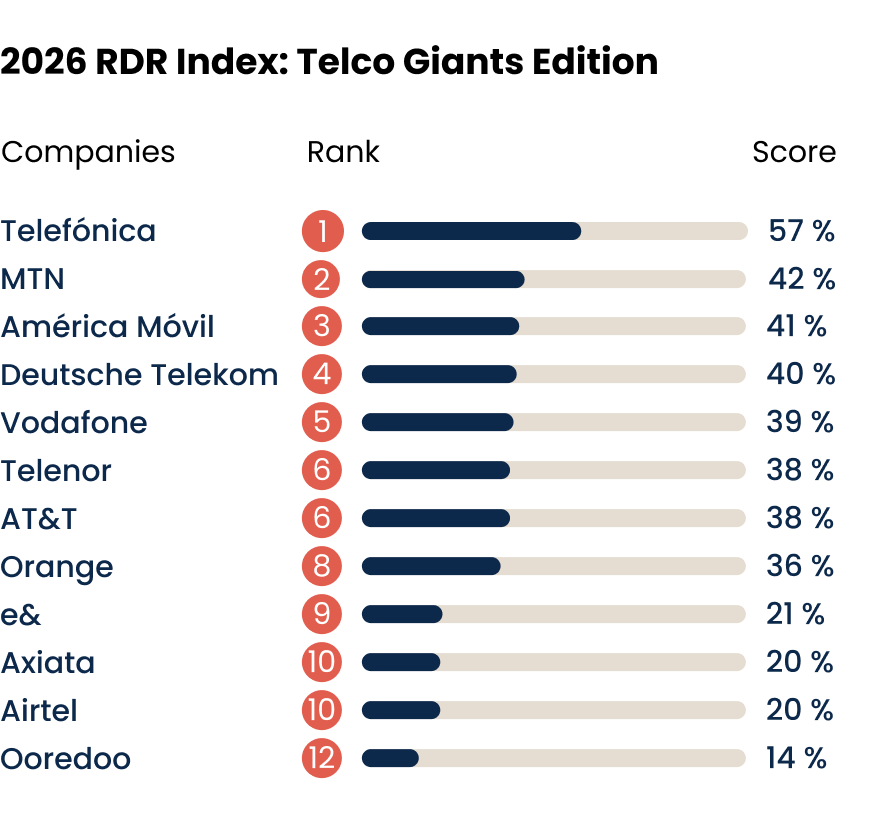
Zhang recognised these efforts and said MTN "still stands out from all 12 telcos that RDR has evaluated," because it still discloses detailed information about its procedures and the process to respond to and review government requests on shutdowns.
She regretted, however, that such transparency was not applied for the Iranian market: "From RDR’s perspective, we believe the absence of data still matters. We have an indicator specifically looking at transparency around governments ordering shutdowns, so the lack of disclosure in Iran resulted in some loss of MTN’s credit in the RDR research," Zhang said.
Stacey Cram, associate director of the Investor Alliance for Human Rights and moderator of the event, described the case of MTN as "a clear example of why tracking this is important and why having chutzpah to drive forward these issues is critical in this sector and why, as investors or civil society, we also need to be tracking, monitoring and holding companies to account on these issues."